- Center for Strategic Management
- Center for Innovation
- Center for Start-up-Management
- Center for Digital Business Transformation
- Center for Governance & Compensation
- Center for Sustainability Management
- Center for Executive Coaching
- Center for Leadership
- Center for Change Management
- Center for Personal Leadership & Motivation
- Center for the Future of Work
- Center for Communication
- Center for Rhetoric
- Center for Marketing Management
- Center for Brand Management
- Center for Online Marketing & Social Media
- Center for Resilient Marketing
- Center for Sales Communication
- Center for Financial Management
- Center for Mergers & Acquisitions
- Center for Controlling
- Center for International Management
- Center for Asia
Center for the Future of Work
Strategic Leadership and Organisational Development
The world is on the brink of a major upheaval: the rapid development of artificial intelligence, skills shortages and demographic change, increasing market complexity, and the political realignment of the world – we are in the midst of a profound transformation of the world of work. Predictability is declining, decision-making cycles are shortening, and requirements are changing in parallel – often faster than organisations can adapt. Many companies continue to try to manage these dynamics using tried-and-tested management approaches. Yet linear thinking, heavy standardisation and purely hierarchical decision-making models are becoming increasingly ineffective in complex and uncertain environments. However: the future offers companies new opportunities that we must now seize by adapting to the new world of work. How we achieve this is the primary focus of the Centre for the Future of Work.
What has long been discussed under the buzzwords ‘New Work’ and ‘Agility’ is no longer an optional cultural or HR issue, but a strategic necessity. The Future of Work directly determines how adaptable and innovative organisations will be in the future. Artificial intelligence is fundamentally changing role profiles, decision-making processes and value creation. At the same time, uncertainty is growing among employees – for example, regarding job security, skill requirements and long-term prospects. Employee retention and engagement, learning ability and cultural orientation are thus becoming key success factors for the company.
In this context, it becomes clear that corporate culture is not merely a supplementary ‘soft’ issue, but an integral part of effective strategy. Organisational and working models, leadership approaches and cultural values play a decisive role in determining how well companies can cope with uncertainty, change and technological disruption. Attractive working conditions are not an end in themselves, but strategic responses to demographic change and shifting expectations regarding work. Standardised concepts and isolated measures are not sufficient to make organisations fit for the future. What is needed are nuanced solutions that combine the individual needs of employees with the economic, technological and structural conditions of the company – particularly against a backdrop of growing uncertainty. Studies show that companies which consistently align their strategy with the future and systematically develop organisational learning and adaptability are more productive, innovative and resilient. Managers play a central role in this: they provide direction, translate strategy into day-to-day work and enable learning, adaptation and responsible action – even under pressure.
The Centre for the Future of Work helps organisations to systematically develop precisely these skills. The focus is on building a dynamic, fast-learning corporate culture in which employees and managers gain the expertise and confidence to deal continuously with change, technological disruption and uncertain market conditions – in a strategic, socially responsible and sustainable manner.
Corporate Programs
In corporate programs, future-of-work-strategies can be effectively learned and applied based on specific challenges. Executives, managers and employees can thus incorporate new impulses directly into the corporate context and make practical use of learned strategies and measures, e.g.:
- Development of a tailored strategy based on a company specific audit (also possible for individual teams or departments)
- Development & management of impactful measures to increase employee satisfaction and company performance
Consulting Services, Workshops & Keynote Speeches
- Organisational analyses for teams, departments or the entire company, focusing on learning agility, collaboration and adaptability
- Development of a targeted assessment framework to analyse existing learning practices within the company and identify the changes needed to understand, adopt and effectively utilise new technologies more quickly
- Development of a forward-looking organisational and workforce strategy, including the identification of concrete courses of action
- Design of a roadmap for the systematic development of working methods, decision-making processes and learning processes. Implementation and support of organisational transformation processes
- Keynote and specialist presentations on the future of work and the development of skills for a technology-driven working world
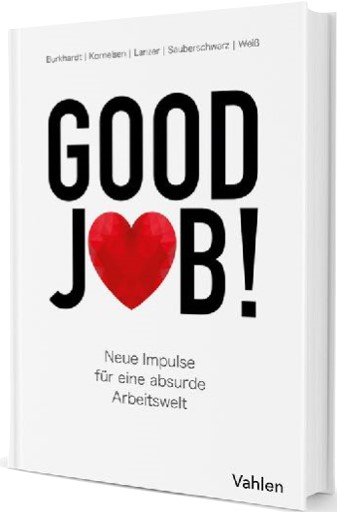
Publications
Point of Contact
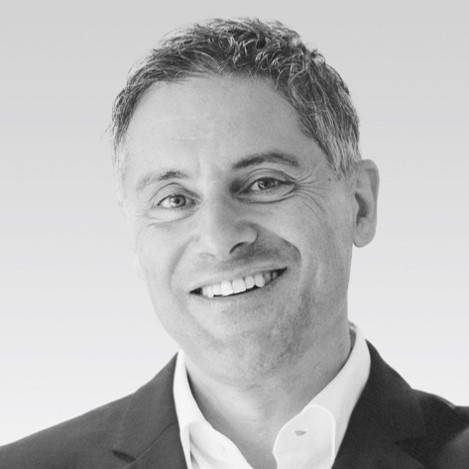
Andreas Seitz
Expert of the Center for the Future of Work at SGMI Management Institute St. Gallen
Andreas Seitz is a literature, linguistics and marketing graduate from Munich University. As a member of the executive board, he was involved in the successful development of the media company RTL Disney. For more than 20 years, he has accompanied development processes on an organizational level as a consultant, advising more than 50 CEOs in change projects, working for more than half of the DAX corporations while implementing projects in Europe, North America and Asia. One focus of his work is cultural change and the development of cultures of trust and agility with a view to the future challenges in organizations. He is a trained consultant for organizational and team development and is certified as a consultant for the Richard Barrett Cultural Transformation Tools (CTT) and for the Ego Development Profiles of Jane Loevinger. In his view, the future of work and the digital transformation in particular make it necessary to launch evolutionary development processes and to involve people in shaping the future instead of following the old unfreeze-change-freeze paradigm. As a book author, he has published "Agility of Tomorrow - Leading in the Future", "Leading through Crisis - the Transformative Power of a Pandemic" as well as guest commentaries and essays. He shares his knowledge and experience primarily in these areas:
- The Future of Work: Transforming organizational cultures
- Value-based culture development
- Leadership development within cultural change
- Leading Change: Bringing people along and involving them
- New forms of organization and collaboration
- Development of agile leadership mindsets
- Staged development models for organizations and their leadership
- The future of work in the context of digital transformation
Fabienne Bauer
Expert of the Center for the Future of Work at SGMI Management Institute St. Gallen
Fabienne Bauer is an expert in leadership development, cultural transformation, and the psychological foundations of effective collaboration in organizations. Her work focuses on a central question: which human skills enable organizations to operate effectively in an increasingly complex and rapidly changing environment. With an academic background in business psychology and communication studies, she combines psychological depth with a strong understanding of organizational dynamics. In her research and teaching at Osnabrück University of Applied Sciences, she worked at the intersection of leadership, mindfulness and psychology, examining how self-leadership and emotional regulation influence decision-making, collaboration and performance. She is a trained systemic coach and a team coach with additional training in facilitation and group dynamics. In her consulting work, she works with executives, leadership teams and organizations undergoing transformation across a wide range of industries. Her focus lies on developing leadership cultures that enable psychological safety, effective collaboration and resilience in complex environments. A distinctive element of her work is translating insights from psychology, neuroscience and leadership research into organizational practice. Her work focuses on a central insight: an organization’s long-term adaptability depends on its ability to develop people — and on leadership’s role in enabling learning, collaboration and change. Her areas of focus include:
- Leadership in complex systems
- High-performing management teams
- Cultural Change and Organizational Transformation
- Psychological safety as the basis for effective collaboration
- Building resilient organizations
- Emotional Intelligence as a Core Leadership Skill